Charles Gounod: The French Master of Opera and Sacred Music
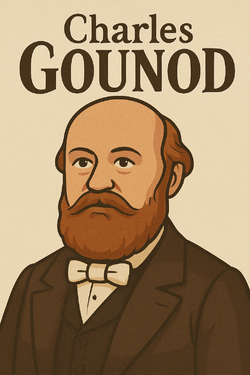
French composer renowned for his operas, sacred music, and the enduring melody 'Ave Maria', based on Bach.
Born in Paris, Gounod won the prestigious Prix de Rome in 1839.
Initially drawn to the priesthood, he ultimately dedicated himself to composition.
His operas, particularly 'Faust' (1859), achieved immense international success and defined French Romantic opera.
He composed significant sacred works, including masses, oratorios, and motets.
Gounod spent time in England (1870-1875) following the Franco-Prussian War.
He died in Saint-Cloud, France, in 1893.
- Gounod entered the Paris seminary in 1846 and studied theology, intending to become a priest. He composed much sacred music during this period. However, he left the seminary in 1848 without taking orders, deciding to pursue a secular music career.
- His path wasn't always smooth. His opera "La nonne sanglante" (The Bloody Nun, 1854) was a critical failure. Later in life, he suffered from periods of depression and hypochondria, sometimes hindering his work.
- Gounod died unexpectedly of a cerebral hemorrhage (stroke) in 1893, just hours after putting the final touches to his "Requiem in C major", a work intended for his own funeral. He was buried in Paris's Auteuil Cemetery.