Pixinguinha
Pixinguinha was a foundational Brazilian composer, arranger, flutist, and saxophonist, widely regarded as one of the greatest figures in Brazilian popular music, particularly for his role in developing and popularizing the choro genre.Born in Rio de Janeiro, Pixinguinha was a child prodigy, composing his first choro at age 14. He led the groundbreaking group Os Oito Batutas, which toured Europe and significantly influenced Brazilian music. As a composer, he created timeless classics like "Carinhoso" and "Lamento." He revolutionized choro through sophisticated arrangements, harmonies, and rhythms, blending European forms with African-Brazilian influences. He worked extensively as an arranger for RCA Victor and for radio broadcasters, shaping the sound of Brazilian popular music for decades. He received numerous honors and is celebrated as a national treasure.
- He suffered a near-fatal heart attack in 1940 while recording the song "Cantora do Rádio" with singer Carmen Miranda. He was revived but the incident significantly impacted his health and led him to switch primarily from flute to tenor saxophone.
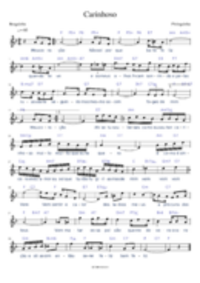
- His most famous composition, "Carinhoso," initially faced criticism for being too modern and "un-choro-like" when composed around 1917. It only became a massive hit decades later when lyrics were added by João de Barro (Braguinha) in 1937.
- He faced a significant professional setback and personal scandal when he was falsely accused of plagiarism in the late 1920s regarding the composition "Luar do Sertão," though he was ultimately cleared.
- Pixinguinha composed "Um a Zero" (One to Zero) in 1919, inspired by Brazil's victory over Uruguay in that year's South American Championship (Copa América) final, cementing the link between football and Brazilian music culture.
- His state funeral in 1973 was a massive public event, reflecting his immense cultural status. He is buried in the Caju Cemetery in Rio de Janeiro.