
Do music and visual art influence one another?
Do music and art influence one another?
The relationship between visual art and music operates at multiple levels. On an individual scale, synesthetes and collaborative artist-musician duos demonstrate cross-sensory connections. On a grander scale, entire movements like the Baroque exhibit abstract qualities—ornamentation, for instance—that permeate both media. This study develops a method for measuring cross-modal similarities between music and visual art. The goal is twofold: first, to reveal direct influences between the two media, and second, to determine whether these connections have strengthened or weakened over time. The analysis focuses on the cross-modally linked continuum of lightness of color and height of pitch, applied to paintings and music from Russia and France created between 1870 and 1920. The model extracted, measured, and compared lightness of value in visual works against pitch height in musical compositions. While Russian visual art proved measurably darker than French visual art of the same period, no significant differences emerged between Russian and French music. Although the results do not indicate direct influences manifesting differently across the two media, they demonstrate the usefulness of the lightness-pitch model for future studies seeking to measure cross-modal convergence and divergence across different eras.
The intertwined histories of sight and sound
The interaction between visual art and music has become a central concern in art theory and history. Over the last century, artists openly influenced by music have become common. Abstract Expressionist Jackson Pollock and Cubist painter Stuart Davis both embraced jazz as an artistic force. Pop artist Andy Warhol was deeply affected by the rock band Velvet Underground, an influence that became reciprocal when he managed the group in 1965. Even when direct influence is absent, visual art and music can share abstract qualities without explicit communication. Both media draw upon common cultural sources and undergo concurrent pressure from societal forces, such as political movements or technological change.

Beyond shared inspiration, visual art and music are also connected through the labels applied to their movements: Mannerist, Classical, Romantic, Impressionist, Pointillist, and Minimalist. Typically, movements in both art and music that share a title also share a historical period. Yet occasionally, movements separated in time have been linked due to common abstract characteristics. The term "Mannerism" in visual art refers to a sixteenth-century style, while musical Mannerism (also called Ars Subtilior) describes a French compositional practice from nearly two hundred years earlier. Both share an intense quality of distortion. A quintessential visual example is Parmigianino's 1535–1540 painting The Madonna with the Long Neck, which distorts space by elongating and warping figures almost to the point of disorientation. This feeling of disorientation aligns with the Mannerist musical movement found in pieces like Baude Cordier's circa 1385 choral work Belle, Bonne, Sage, where melodic content is rhythmically tangled and dizzyingly complex. Cordier notated this piece in the shape of a heart (eye music), creating a striking metaphor for the avant-garde nature of the style. Though these works were created 155 years apart, they are grouped together under the Mannerist label because of their shared quality of distortion, each realized in its respective medium of light or sound.
The terminology of music and visual art also includes direct parallels: texture, balance, form, line, and harmony all carry abstract meanings in both domains. Texture in visual art refers to the physical thickness and roughness of the medium, whereas in music it describes the audible activity of voices and their movement along the staves. While these shared qualities are recognizably similar in their abstract form, a way to quantify them could establish a more direct connection and help determine the extent of mutual influence. To our knowledge, no researchers had previously attempted to measure any abstract similarities between music and visual art empirically.
Evidence of cross-sensory connections
Long before any quantitative comparisons were attempted, evidence showed that people do make connections between visual and auditory input. In 1910, Wolfgang Köhler conducted an experiment to determine whether humans naturally map sounds onto visual objects. He presented subjects with two shapes—one jagged and sharp, the other organic and rounded—and asked them to assign the names "Baluba" and "Takete" to these shapes. The overwhelming majority chose "Takete" for the jagged shape. Later experiments with variations on the names and subjects produced consistent results. Among native speakers of multiple languages, including toddlers, 95–98 percent make identical picture–word associations. This shape-sound correspondence study, now called the Bouba/Kiki study, produces what researchers term the Bouba/Kiki Effect. These results make it clear that cross-sensory translation between visual and auditory information generally occurs within a population. This phenomenon is called cross-modal abstraction—the process of semi-consciously isolating a characteristic of experience in one sense and applying it metaphorically to another. Neuroscientist V. S. Ramachandran illustrates this through the example of "sharpness" in cheddar cheese: the cheese itself does not become physically sharper, yet people use that word to describe the increasing strength and pungency of the taste.
The first written acknowledgment of an inherent relationship between music and visual art appeared in Russian painter Wassily Kandinsky's 1911 book Concerning the Spiritual in Art. Kandinsky believed art should function as frozen music, evoking both a physical effect and an "inner resonance" in the viewer. He argued that a color instigates in its observer the emotion ostensibly inherent within it. Kandinsky made specific color-mood connections, many of them musical: black as a symbol of absolute silence; blue and yellow carrying intrinsic timbral characteristics such as those of the flute and trumpet. While Kandinsky's connections between colors and musical textures were deliberate for him, they may not be apparent to individuals without synesthesia.
Synesthesia and the creativity connection
Many cognitive scientists, neuroscientists, and art historians now suspect that Kandinsky was a chromesthetic synesthete. Synesthetes experience an additional sensation in a secondary sense upon receiving a stimulus. A person with chromesthesia will perceive a color upon hearing specific pitches or timbres. Because these experiences are automatic, many synesthetes do not realize their perception differs from that of non-synesthetes until the discrepancy is pointed out to them. Kandinsky wrote openly about allowing his painting style and voice to be influenced by the musical textures he encountered, describing the orchestration of paint and the musical significance of color.
Synesthesia remains common among living artists, many of whom acknowledge that the condition strongly affects their artistic choices. New York oil painter Carol Steen described her synesthetic experience in a statement about her 2003 painting Runs Off in Front: "This is based on an especially colourful photism that occurred while I listened to Santana's version of a song called Adouma. The colours I see are the colours of light, not the colours of pigment, and I played this song over and over again as I painted the moving colours. The advantage of sound visions…is that I don't have to rely on my memory. I can replay the song as often as I want to watch the colours." The number of self-identified synesthetic painters has grown so substantially that historians and cognitive scientists now look back at past artists who may have been synesthetes: Van Gogh, Gauguin, and Kandinsky himself—all notably extravagant in their use of color.

Synesthesia has been linked to higher levels of visual and verbal intelligence, as well as metaphorical capacity. In 1989, Domino conducted a study to test whether synesthesia occurs more frequently among artists, since anecdotal evidence had long connected the two. After surveying and testing 358 students majoring in fine arts, the study found a much higher percentage of synesthetes among them (23 percent) than the expected less than 5 percent in the general population. Individuals whose synesthetic variation involves visual stimuli may be drawn toward artistic professions because of this sensitivity.
The terms "synesthesia" and "cross-modal abstraction" were until recently used interchangeably. Many researchers placed synesthesia at one extreme of a continuum: at one end lies the common phenomenon of simple cross-sensory metaphors, generally present and consistent within populations; at the other lies pure synesthesia, the automatic activation of one sense upon stimulation of another. In 1999, Greta Berman wrote, "It is my own belief that synesthesia exists on a continuum; the range extends from pure synesthetes to individuals who have no cross-modal associations at all." This view went unchallenged until 2013, when Deroy and Spence argued that such a continuum would be fundamentally inconsistent.
Cross-modal abstraction, they proposed, is a process of intuitive but conscious sensory metaphor, consistent between people. Synesthesia, by contrast, is an anomalous, vivid, cross-sensory activation occurring in a very small percentage of the population, varying from one synesthete to the next in the details of sensory activation. For example, while many people make a cross-modal connection between the sharpness of a shape and the crispness of a plosive sound (as in the Bouba/Kiki Effect), a synesthete viewing a plain jagged shape might variously experience the color mauve, the sound of a harp being plucked, or the taste of creamed spinach. These phenomena also arise in different regions of the brain. Cross-modal abstraction is believed to occur largely in the angular gyrus, where functions including language, spatial cognition, and memory retrieval converge. Synesthesia, however, can involve two or more brain regions through cross-communication between the areas controlling the senses being activated. In number-color synesthetes, a cross-connection exists between the number and color regions of the brain. Deroy and Spence made a strong case that these phenomena should be treated as separate processes and not conflated. As a consequence, many earlier studies that blurred this distinction now require reevaluation.
Historical precedents for cross-media influence
Although explicit influence between music and visual art became more common in Jackson Pollock's era, it is not an exclusively modern phenomenon. Marchetto da Padova composed his motet for the dedication of the Scrovegni Chapel in 1305 based on the building's architecture and Giotto's murals. There is also evidence that Giotto was concerned with the appropriateness of the instruments he painted. In one case, he painted over his earlier fresco to replace what had been a boisterous trumpet—the traditional wedding procession instrument—with a much quieter, serene flute for a mural depicting the Procession of the Virgin Mary. The rise of live performance forms such as fifteenth-century ballet and sixteenth-century opera presented many chances for visual and musical artists to collaborate and develop synergy between sets, costumes, and music.
A 1983 study by Hasenfus suggested that self-declared laypeople who consider themselves artistically naive can nonetheless group and connect cross-media artistic movements. While the study remains influential, the reason for its results is still unclear. Hasenfus argued that cross-modal metaphor arises when stimuli are "processed at a level abstract enough to allow intersensory comparisons." The precise translations enabling these intersensory comparisons have not been determined.
Measuring pitch and lightness
Solid evidence shows that populations generally associate higher visual value, or lightness, with higher auditory pitch. These attributes can be measured in both visual works and music. We used a model that extracts and measures three linked attributes: strength of color, lightness of value, and height of pitch. These qualities were chosen because they are empirically measurable and because a large body of evidence supports a shared cross-modal gradient connecting them. Pitch, unlike note lengths or volume, remains relatively fixed regardless of performance variation. For this study, pitch was compared to "brightness" in the sense of greyscale lightness rather than chromatic saturation.
The model was tested on Russian and French music and visual art created between 1870 and 1920. This period offers particularly rich material because of the breadth of musical and artistic innovation. The time frame includes the French Impressionists in both music (composers such as Satie and Debussy) and art (painters such as Degas and Monet). In Russia, a strong national voice in art and music was taking shape, led in music by the Mighty Five (Balakirev, Cui, Mussorgsky, Rimsky-Korsakov, and Borodin) and in visual arts by The Peredvizhniki (including Shishkin, Repin, and Surikov).
Although nationalism was a driving priority during this period, French and Russian artists and composers likely interacted, if only through influence and the cross-fertilization of their respective arts. After 1873, Liszt's appreciation introduced the new Russian music, including works by the Mighty Five, to audiences in Western Europe. Even composers as French as Debussy were likely familiar with Russian works such as the 1878 Paris performance of Rimsky-Korsakov's opera Sadko. The Peredvizhniki had a complicated relationship with French Impressionist art. When Repin painted French-style landscapes in the mid-1870s, the philosopher Kramskoy accused him of shirking his artistic responsibilities to his country by fleeing the battle for an independent Russian art.
The visual works measured from this period and location were measurably darker in Russian art than in French art, yet in music no significant pitch differences emerged between the two national traditions. This finding does not suggest that direct cross-media influences were expressed differently in Russia than in France. What the study does demonstrate is the viability of the lightness-pitch model as a tool that can be applied to other eras and regions to document how these cross-modal connections may strengthen or weaken over time.
Russian artists depict scenes and people of their native land. However, when Kramskoy visited France a decade earlier, he had urged his fellow artists to study Western art theory and history (Valkenier).
Some evidence points to possible fundamental pitch differences between French and Russian music. In choral music, the Basso Profundo and Oktavist—both renowned for their exceptionally low vocal ranges—were frequently employed in traditional Russian Orthodox music before the 18th century. Such vocal parts rarely, if ever, occur in French choral works, whether liturgical or secular. Consequently, Russian choral liturgical music before the 19th century can be expected to be generally lower in pitch.
Little research exists on value differences between Russian and French visual art. Anecdotal suggestions indicate that Russian art from the early 1900s is typically darker than French art of the same period. This can be attributed both to the French Impressionist aim of representing light-filled atmosphere and to geographic differences in the amount and intensity of natural sunlight between France and Russia.
Any selection of works chosen deliberately, even by the best-intentioned researcher, risks bias. Although we have attempted to gather a substantial number of musical and visual works representing each country, we must note that they were not selected using a double-blind method, and digital availability of the works constrained us. Therefore, this study should be regarded as a preliminary exploration into measuring connections between music and art of the same period or movement.
Methods
When selecting images, we ensured that the works met specific criteria allowing analysis and cross-comparison. To obtain a consistent sample, only images completed between 1870 and 1920 were considered. Undated works were accepted only when the artists' professional careers fell within that 50-year period. To prevent medium and paint color availability from influencing results, the samples consist exclusively of oil paintings on canvas or panel. To ensure a consistent range of manipulable atmosphere, only landscapes and large-figure compositions were admitted, as these subjects allow artists to depict a fully controlled environment. Since samples were gathered digitally, it was essential that the images were large, high-resolution photographs. The pigments available to French and Russian artists in the late 19th century were similar to those available today, allowing us to carefully isolate and evaluate color saturation and image quality, ensuring that none of the chosen photographs were altered in ways that would distort results.
Each musical piece selected also came from the period between 1870 and 1920. To avoid issues arising from differences in harmonic overtones and instrument ranges, all chosen pieces consist of instruments with singular or similar timbres.
The pieces chosen were written for piano, organ, harmonium, a cappella choir, brass, and string quartet. Both programmatic and absolute music were accepted. Although some pieces were originally written for other instruments, only arrangements by the composer (or another composer from the same time and country) were accepted.
To minimize the risk of cross-contamination from other musical and artistic ideologies as much as possible, only composers and artists who had studied their craft in and embraced the compositional principles of their own country were selected. For this reason, several notable and famous figures—such as Piotre Tchaikovsky, who studied Western-style composition and consequently had a complex relationship with the Russian Five, and Wassily Kandinsky, who studied extensively in places including Estonia and Germany—were excluded from this study. While cross-cultural interaction is inevitable, factors such as purported nationalism and acceptance among artists' and composers' peers were considered to attenuate the effect that strong cross-cultural interaction could have on the results. Once 80 images from each country were collected, the data from each file were extracted using a color summarizer (Krzywinski). Each image underwent this process, which isolated and quantified every pixel, providing a set of measurements. From these, we extracted measurements of value and saturation and calculated both the mean and standard deviation of value and saturation for each image. This ensured that the data included not only the mean value but also the tonal range of each piece. The completed image extractions were then tested for significant differences in means and standard deviations between works from both countries.
The 153 musical pieces collected (77 French and 76 Russian) were analyzed in their MIDI form. MIDI, an instructional file for computer playback of a musical piece, employs a binary standard. Each file was broken down into its binary components, extracting pitch data specifically. We included both the frequency of each pitch occurrence (hereafter referred to as "appearance") and the duration each note was played (measured in "ticks," the unit by which note lengths are recorded in MIDI code). From these data, we calculated the mean and standard deviation of pitch, just as we calculated the mean and standard deviation of value for the images.
Although the unaltered musical and image data cannot be directly compared with one another—visual data are measured on a scale of 1-100, audio data on a scale of 1-127 or 0-128, with no indication of matching scale degrees—it is reasonable to compare relative differences within and between media from different countries. For example, if French art and French music were both higher in their respective modality measurements than those from Russia, these results would suggest that one or more forces may be acting on the arts, manifesting across more than one medium through cross-modal translations. We administered a series of tests to compare these pitch and value data and to determine whether statistical significance exists between countries.
A Student's t-test is typically used to determine whether the difference between two group means is statistically significant. Two groups can be considered significantly
different if they differ more than would be expected by chance. Statistical assumptions of the Student's t-test include normal (Gaussian) distribution of data errors and equality of distribution variances between groups. Significant deviations from normality can be tested with a Shapiro-Wilk test, and significant differences between group variances can be tested using an F-test. The distributions of painting value means and standard deviations, composition appearance means and standard deviations, and tick means and standard deviations were typically normally distributed with equal variances. Exceptions to normality occurred only in compositions, including Russian appearance means, French appearance standard deviations, and Russian ticks standard deviations. Exceptions to equality of variances included differences between French and Russian value standard deviations in paintings and between French and Russian ticks standard deviations in compositions. To statistically account for non-normality, data transformations (e.g., log transformation) can be used, and although Student's t-tests are generally robust to unequal variances, a Welch's t-test can test differences between groups with different variances. Alternatively, randomization tests—where data (e.g., value means of paintings) are randomly reassigned to groups (e.g., countries)—can test the significance of differences between group means. Randomization tests are advantageous because they apply regardless of whether the true distribution of the data is known and can be described more easily in non-technical terms. Therefore, we used randomization to test for significant differences between groups, but results were qualitatively identical to those that would have been obtained using Student's t-tests or Welch's t-tests. All analyses were performed using R software (R Development Core Team).
To test whether differences between groups are statistically significant, group assignment is randomized over many iterations. The logic of randomizing group assignment is to determine whether the actual difference between groups in the observed data is greater than would be expected by chance. If the difference between mean group values does not differ from what would be expected by chance, then randomly shuffling group membership should produce randomized mean group values not much different in magnitude from the observed values. For example, for value means of Russian and French paintings, all 160 data points (80 Russian and 80 French paintings) can be randomly reassigned to Russian or French labels, producing a new data set with the same 160 data randomly split into two groups of 80. If the difference between the means of the randomly assigned groups is not much different from the difference between the means estimated from the observed data, this indicates that the difference between group means in the observed data (French versus Russian painting value means) is not greater than would be expected by chance. It could then be concluded that value mean does not differ between Russian and French paintings. Of course, more than one randomization is necessary to determine confidently whether the observed difference between groups exceeds that predicted by chance. In the statistical tests that follow, group identity was randomly reassigned 999 times. For each of these 999 iterations, the difference between group means was calculated.
After these iterations, the difference between estimated group means from the observed data is compared to the distribution of differences from the randomized data to estimate the probability (P) of observing a group mean difference of equal or greater magnitude assuming random group assignment. For example, if the difference in the observed data is greater than any difference in the randomized data, then P = (1+0)/(1+999) = 0.001. If the difference in the observed data is only greater than 900 values in the random data, then P = (1+99)/(1+999) = 0.010. As is customary, we use P values lower than 0.05 as the threshold below which differences between groups are considered statistically significant.
Six tests of differences between French and Russian data included tests for differences in painting value 1) mean and 2) standard deviation, composition appearance 3) mean and 4) standard deviation, and composition ticks 5) mean and 6) standard deviation. For each test, randomization tests estimated the significance of differences between groups. Bootstrapped 95% confidence intervals for group means were calculated by randomly sampling data within groups with replacement (Manly). Data were re-sampled with replacement 1000 times with sample sizes equal to those in the observed data, and means of each sample were collected and sorted. The 25th lowest value was used as the lower confidence interval, and the 775th value as the upper confidence interval.
Results
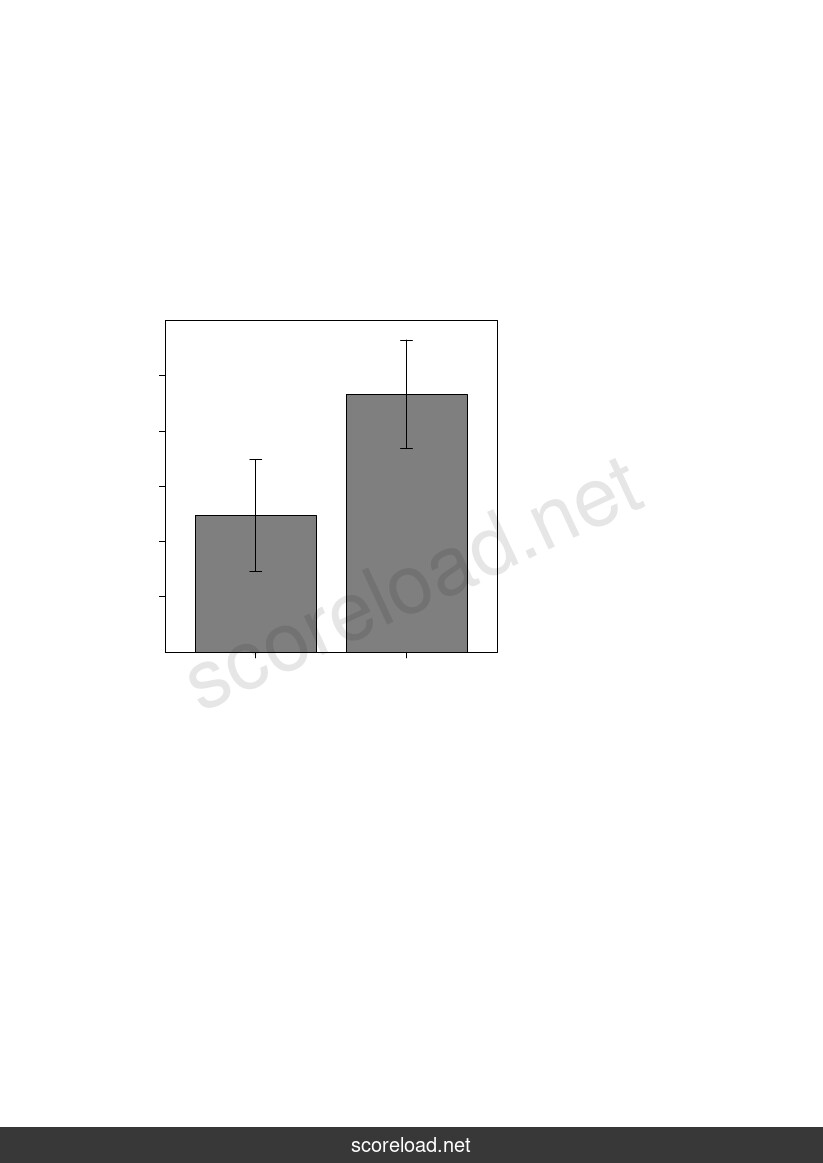
Differences between painting value means (P = 0.001; Fig.) and painting value standard deviations (P = 0.002; Fig.) were significant, but differences between composition note appearance means (P = 0.236) and standard deviations (P = 0.113) were not significant, nor were differences between composition ticks means (P = 0.481) or standard deviations (P = 0.531). Thus, differences between Russian and French paintings can be interpreted as statistically significant, but compositions were never statistically significant, so the estimated means of these data are considered statistically identical. Figure shows that value means are higher in French paintings (estimated mean = 59.00) than in Russian paintings (estimated mean = 50.28). Figure shows that value standard deviations are higher in Russian paintings (estimated mean = 20.66) than in French paintings (estimated mean = 18.47).
Discussion
From the 160 painting samples collected, we inferred that art in Russia was found to be both significantly darker and to have a significantly larger range of value than art in France. From the 153 musical samples collected, no significant difference was found in pitch or pitch range between Russian and French music. These results could be caused by multiple possible underlying factors. The relationship of value and pitch might manifest only within individuals, not affecting entire art movements. Alternatively, strong cross-modal influences might have acted on large-scale art movements in visual art and music between 1870 and 1920, but
they were not present or strong enough to show manifestation in the relationship of pitch and value. However, other extrasensory factors deserve consideration.
Figure 5: Expected value means for French (N=80) and Russian (N=80) paintings (1870-1920). Error bars show 95% bootstrapped confidence intervals around means.
The differences in value between Russian and French visual art indicate differences in the goals of Russian and French artists. When the same white or yellow is added to different paint pigments (lightening the overall value of a piece), there is an overall effect of lightness and unity within the lights. In many of the French pieces gathered, white or yellow (often a mixture of both) was added to pure tube paint to maximize the chroma-to-light ratio. This intensified the effect of the sun in the lighter parts of the painting, encouraging the viewer to experience the overwhelming brightness of a sunlit day. By maintaining a smaller range (which we measured using standard deviation) of value between the lightest lights and the darkest darks, the paintings hold a strong sense of atmosphere, as if the air between the viewer and the shadows were soaked in sunlight. When less white is used in the lights (resulting in lower values), the resulting colors have a stronger sense of chroma, giving the viewer an impression of drama. In the Russian visual works gathered, many of the painted skies included pigments that could have been used straight from the tube. Just as some French works conveyed intense lightness (established by using large amounts of white and yellow) in their sunlight, many Russian works conveyed intense chroma (established with full-chroma paint) in their sunlight. Both methods allow artists to establish the abstract quality of "brightness" in their works, but through different means. Additionally, each approach to capturing brightness creates natural consequences in chroma. By adding whites and yellows to the lights, French artists could use stronger colors in their shadows, as unadulterated pigments are dark enough to contrast with lighter values. However, the whites and yellows in the lights reduce the natural chroma of the colors
with which they are mixed. By not adding whites and yellows to lighter colors, Russian works have stronger chroma in their sunlight. Yet the dark portions of their paintings must be lower in value than unadulterated pigment to provide contrast, resulting in a sacrifice of chroma in the shadows. Although value usage diverged between these countries, each technique employs a balance of potency and restraint in color using opposite ends of the value spectrum.
Figure 6: Expected value standard deviations for French (N=80) and Russian (N=80) paintings (1870-1920). Error bars show 95% bootstrapped confidence intervals around means.
While potency in chroma is affected by its value, human sensitivity to sound also exists within music, and that sensitivity lies in both pitch and tone. The human ear can hear notes in roughly a 10-octave range and is more easily discerning of pitches near the traditional musical grand staff or the notes found on the modern piano. The modern piano has a range of a little over 7 octaves. Most modern orchestras can span up to 6 octaves, each instrument having its own range. Most modern choirs have a range of just under 4 octaves. Because of the pitch limitations of human hearing—and consequently the pitch limitations of these instruments—the available sliding scale of pitches does not typically encompass notes that are difficult for the human ear to perceive or notes that differ in their discernibility. As such, there is no sacrifice of musical potency when using the entirety of the available musical notes. While French and Russian art achieve balance of chroma and value in different ways, maximizing pitch strength does not require relinquishing potency in another auditory quality.
The openness to incorporate artistic elements from one culture into another varied between media and between countries. The Russian Peredvizhniki were actively discouraged from embracing Western European artistic styles, including those of the French, whom they both admired and sought to distinguish themselves from.
Philosopher Kramskoy insisted that Russian artists must view French art critically to separate Russian aesthetics entirely from the rest of Europe (Valkenier). Conversely, French composers such as Debussy and Ravel were noted to be directly influenced by the works of Russian composers of the time. In 1878, at least four concerts of Russian music (by Glinka, Tchaikovsky, Dargomizhsky, Alexander Serov, and Rimsky-Korsakov) were performed in Paris.
In addition to philosophical and political reasons for these differences, it is likely that because music is transportable, there is greater capacity for cross-pollination of musical ideas and voices than for visual art, which could remain in only one place at a time. Even when Kramskoy encouraged the Peredvizhniki to study and learn from Western European art and history, the artists would still need to travel to France to see large collections of contemporary French art. However, the same piece of music can be played in two cities simultaneously without any
The idea that music’s greater portability could allow it to function as a cross-sensory conduit for visual ideas is particularly intriguing. If a musical work absorbed influences from the visual art of its time, the resulting abstract, inter-sensory characteristics could travel more easily between countries. Such a piece might then go on to shape the visual art of another nation, offering an explanation for any time lag in the stylistic homogenization of French and Russian art—should such a convergence in value and standard deviation later appear.
Hasenfus and colleagues showed that untrained observers can distinguish between cross-modal works from historically defined artistic movements, concluding that such works were “processed at a level abstract enough to allow intersensory comparisons.” Although the results of the present study do not identify this abstract level of value-pitch perception as the sole explanation for that innate ability, other cross-modal abstract elements may still help clarify these findings. Examining features like programmatic content, ornamentation, and pattern frequency could prove useful. If these properties can be quantified, the same statistical methods we employed might help determine their significance.
While our model was tested on a narrow temporal and geographic window between music and art, it could be extended to examine whether cross-modal similarities appear elsewhere or have grown stronger or weaker over longer periods.
Applying this model to other eras where an explicit unity of the arts was championed—such as the circle around Wagner’s Gesamtkunstwerk—could reveal shared abstract qualities. Similarly, in times shaped by a pervasive credo like a political movement or activism, the method might detect how those motivations manifest consistently across the arts. By measuring whether art and music connect more tightly in certain periods and locations, we could identify different expressions of a period’s artistic philosophy. An intriguing extension would use the visual-analysis portion of this model to ask whether the differences between French and Russian art persist today, and whether the two national traditions have maintained their distinctive value profiles even amid increasing globalization.
Both visual art and music have evolved in their own ways as techniques and technologies opened up new styles and subjects. Domino produced evidence that synesthetes are highly prevalent in the arts, and many such synesthetic artists openly incorporate other media as inspiration. Our model provides a tool to test whether cross-modal abstraction—particularly the lightness-pitch correspondence—influences their creative choices, and whether those choices remain consistent within individual artists as well as between their works and their inspirations.
Acknowledgements
We are grateful to John Cunnally, Brent Holland, and Christopher Hopkins for their insightful comments on this manuscript. Thanks also to Erik Ruser and Martin Krzywinski for their assistance with data extraction.