Henry Purcell: England's Baroque Master
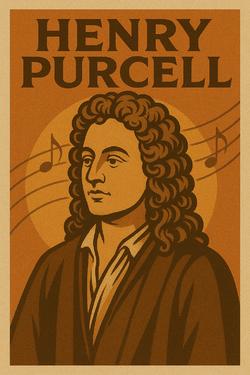
Henry Purcell was a preeminent English composer of the Baroque era, renowned for blending Italian and French stylistic elements into a uniquely English musical language. His works span opera, sacred music, court odes, and theatrical compositions.
Born into a musical family in Westminster, Purcell became a chorister at the Chapel Royal. He held prestigious positions including organist at Westminster Abbey and composer for the King's Violins. Despite his early death at 36, he produced masterpieces like the opera 'Dido and Aeneas' and music for over 40 plays. Purcell's death marked the end of England's golden age of music until Elgar.
- Purcell's cause of death remains debated: theories include tuberculosis, chocolate poisoning (per unreliable 18th-century gossip), or complications from being locked out by his wife after late-night revelry.
- He composed his iconic opera 'Dido and Aeneas' for Josias Priest's girls' school in Chelsea – an unusual venue for English opera's foundational work.
- Purcell's funeral at Westminster Abbey featured his own 'Music for the Funeral of Queen Mary', performed again months later for Queen Mary II's actual funeral.
- His semi-operas like 'The Fairy-Queen' adapted Shakespeare with lavish spectacle, though much of the music was lost for 200 years after a theatre fire.