Yann Tiersen: The Minimalist Maestro Behind Amélie
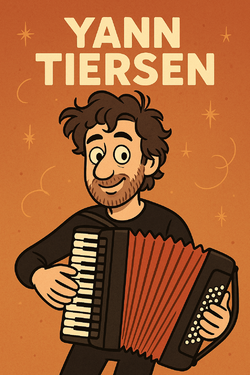
French composer and multi-instrumentalist renowned for his minimalist, melancholic, and evocative instrumental music, particularly the soundtrack for the film 'Amélie'.
Born in Brest, Brittany, France. Studied violin and piano at conservatoires in Rennes, Nantes, and Boulogne. Initially released albums blending rock, chanson, and classical influences. Achieved global fame with the soundtrack for Jean-Pierre Jeunet's 'Le Fabuleux Destin d'Amélie Poulain' (2001). Prolific solo artist exploring diverse sonic landscapes across numerous albums. Known for incorporating unusual instruments like the toy piano, melodica, and typewriter into his compositions.
- Tiersen initially resisted the huge fame brought by the 'Amélie' soundtrack, feeling it overshadowed his broader work and pigeonholed him. He reportedly found the sudden mainstream attention overwhelming.
- He is a highly private individual who has often retreated to remote locations, notably the island of Ushant (Ouessant) off the coast of Brittany and later Iceland, seeking isolation for his creative process.
- His music is deeply influenced by his Breton heritage, though he avoids overtly traditional Breton styles, instead creating a unique sonic world that sometimes subtly references its landscapes and moods.
- Tiersen is known for his intense live performances, often playing multiple instruments himself during shows or conducting small ensembles.
- He is an environmental activist, particularly concerned with climate change. His album 'EUSA' (2016) was directly inspired by the landscape of Ushant and intended as a musical map.
- Survived a serious accident in 2013 when he fell from a ladder while painting his house on Ushant, suffering multiple fractures. He later reflected on the experience and its impact on his album '∞ (Infinity)'.
- His compositional process often involves extensive layering of sounds, field recordings, and experimentation with found objects alongside traditional instruments.