
Jean-Philippe Rameau
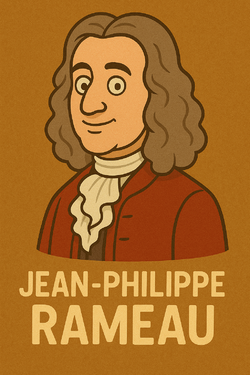
French Baroque composer and music theorist renowned for revolutionizing harmonic theory and French opera.
Began as an organist in provincial churches before moving to Paris. Published seminal Treatise on Harmony (1722) aged 39. Debuted as opera composer at 50 with Hippolyte et Aricie, sparking controversy for its innovation. Composed over 20 stage works while engaging in the Querelle des Bouffons debate. Appointed Compositeur du Cabinet du Roi in 1745.
- His 1722 Treatise on Harmony established foundational principles of tonal music, including the concept of root chords and inversions.
- Rameau's late opera debut at age 50 with Hippolyte et Aricie (1733) caused a Parisian scandal; traditionalists called it 'noisy' while progressives hailed its harmonic audacity.
- He engaged in the Querelle des Bouffons (1752-1754), a fierce cultural debate pitting his sophisticated French operatic style against advocates of simpler Italian comic opera.
- Despite fame, contemporaries described him as socially awkward and obsessive about music theory, often humming abstract chords during conversations.
- Died from typhoid fever in 1764; his funeral at Église Saint-Eustache drew thousands, though the French court denied him official honors due to earlier controversies.


