Camille Saint-Saëns
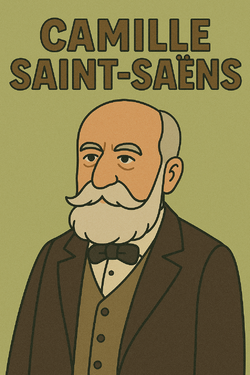
French composer, pianist, organist, and conductor of the Romantic era, renowned for his craftsmanship and melodic ingenuity.
Saint-Saëns displayed extraordinary musical talent as a child, performing publicly at age five. He studied at the Paris Conservatoire, later becoming a prominent organist at La Madeleine in Paris. A founder of the Société Nationale de Musique, he championed French music while maintaining classical forms. His prolific output includes symphonies, concertos, operas, and chamber music, blending Romantic expressiveness with structural clarity.
- A child prodigy, Saint-Saëns could read and write by age three and gave his first public piano recital at five, offering to play any Beethoven sonata as an encore.
- He suffered profound personal tragedy: his two sons died within six weeks of each other in 1878 (one fell from a window, the other succumbed to illness), leading his wife to abandon him. He never remarried.
- Saint-Saëns controversially mocked Wagner's music despite initially admiring him, later calling Wagner's influence 'a mortal danger' to French music.
- He composed one of the earliest film scores for L'Assassinat du Duc de Guise (1908), pioneering cinema music.
- Openly gay in an intolerant era, he lived discreetly but traveled frequently with male companions, spending his final years in Algiers where he died of a heart attack at 86.