Jean-Baptiste Arban
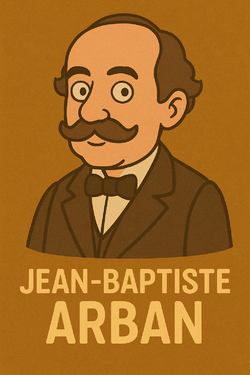
French cornetist, conductor, pedagogue, and composer, renowned as the supreme virtuoso of the cornet à piston in the 19th century.
Born in Lyon, France, Arban studied trumpet and cornet at the Paris Conservatoire under François Dauverné, winning the premier prix in 1845. He embarked on a successful career as a soloist, celebrated for his exceptional technique, range, and lyrical playing. He held teaching positions at several prestigious institutions, including the Paris Conservatoire. His lasting legacy is his pedagogical masterpiece, 'Grande méthode complète pour cornet à pistons et de saxhorn', published in 1864, which remains the foundational method book for brass players worldwide. He also conducted popular promenade concerts and composed numerous works showcasing the cornet, including the famous 'Variations on The Carnival of Venice'.
- Arban briefly performed with a circus band early in his career, an unusual step for a Conservatoire graduate, likely to gain practical experience.
- His composition 'Fantaisie and Variations on The Carnival of Venice' (often called 'Arban's Carnival of Venice') is one of the most famous and demanding solo pieces ever written for cornet or trumpet, cementing his legacy as a virtuoso.
- He faced controversy when he was accused of plagiarizing the 'Carnival of Venice' theme from another composer's variations; the accusation was widely dismissed, and the work became synonymous with his name.
- Arban held influential teaching positions at the École Militaire, the Académie Nationale de Musique, and finally the Paris Conservatoire (from 1869), shaping generations of brass players.
- He died in Paris in 1889. Contemporary sources often cite the cause of death vaguely as 'a brain disease'.
- His 'Grande Méthode' (The Arban Method) is still in print and universally used by trumpet and cornet students globally, over 150 years after its publication.