Robert Schumann: The Tormented Genius of Romantic Music
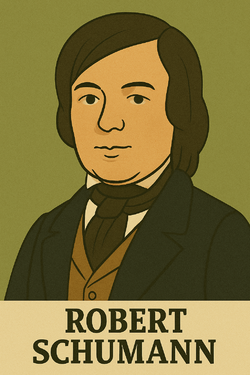
German composer, pianist, and influential music critic of the Romantic era.
Schumann is regarded as one of the greatest composers of the Romantic period. Initially aspired to be a concert pianist but permanently injured his hand. Co-founded the influential music journal Neue Zeitschrift für Musik. Married piano virtuoso Clara Wieck against her father's wishes. Composed piano cycles, lieder, symphonies, and chamber music. Suffered severe mental illness, spending his last years in an asylum.
- Schumann permanently damaged his right hand using a finger-strengthening device, ending his piano career at age 21 and redirecting his focus to composition.
- His marriage to Clara Wieck triggered a bitter legal battle with her father Friedrich Wieck, who tried to block the union. They married the day before Clara's 21st birthday after suing him.
- Schumann experienced auditory hallucinations, depression, and a suicide attempt in 1854 when he threw himself into the Rhine River. He was rescued but voluntarily entered an asylum.
- He died at Endenich asylum at 46. Modern diagnoses suggest possible bipolar disorder, neurosyphilis, or a brain tumor. Mercury treatments for suspected syphilis may have contributed to his decline.
- Schumann championed Chopin and Brahms through his criticism while creating alter egos like the fiery 'Florestan' and dreamy 'Eusebius' in his writings to express artistic dualities.