
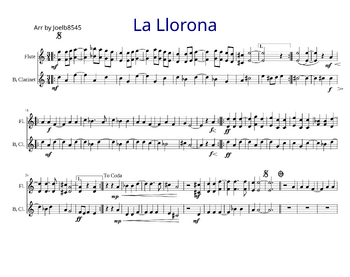

We have a collection of 10 arrangements for La Llorona (Mexican Folk Song)
What tragic legend from Mexican folklore inspired this haunting melody? Learn!
"La Llorona" is a famous Mexican folk song that has a rich history and many interesting facts associated with it. Here are some intriguing details about this haunting and iconic song:
Ancient Origins: "La Llorona" has roots dating back to pre-Columbian Mexico. It is often considered a blend of indigenous and Spanish influences. The song's theme of a weeping woman is reminiscent of Aztec and other Mesoamerican folklore.
Ghostly Legend: The song is based on the legend of La Llorona, which means "The Weeping Woman" in Spanish. The legend tells the story of a woman who drowned her children and then wandered the earth in eternal sorrow, crying for them. Her ghost is said to be heard weeping by bodies of water.
Multiple Versions: "La Llorona" has numerous versions with variations in lyrics and melodies. Different regions of Mexico and other Latin American countries have their own renditions of the song.
Evocative Lyrics: The song's lyrics are poetic and emotionally charged, describing the pain and remorse of a mother who has lost her children. These lyrics often evoke strong emotions in listeners.
Cultural Significance: "La Llorona" has become an essential part of Mexican culture and folklore. It has been covered by many renowned artists and has appeared in various forms in Mexican literature, film, and art.
Musical Influence: The song has had a significant influence on Mexican and Latin American music. It is a popular choice for traditional mariachi bands, but it has also been adapted into various genres, including bolero, ranchera, and even rock.
Film Appearances: "La Llorona" has been featured in several movies, both Mexican and international. Notably, it was used in the soundtrack of the Disney-Pixar film "Coco" (2017), bringing the song to a global audience.
Haunted Locations: The legend of La Llorona is often associated with haunted locations in Mexico, particularly near bodies of water like rivers and lakes. These places are said to be where her ghostly cries can be heard most distinctly.
Cultural Symbolism: The story of La Llorona has been analyzed as a symbol of maternal sacrifice, the consequences of sin, and the intersection of indigenous and Spanish colonial cultures in Mexico.
Ongoing Popularity: Despite its age, "La Llorona" remains a beloved and enduring part of Mexican music and folklore. It continues to be performed and recorded by contemporary artists, ensuring its legacy lives on.
"La Llorona" is not just a song but a piece of cultural heritage that reflects the complex history and emotions of Mexico. It has a timeless quality that continues to captivate audiences around the world.

