
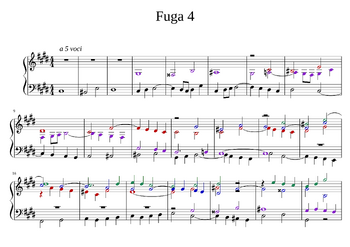
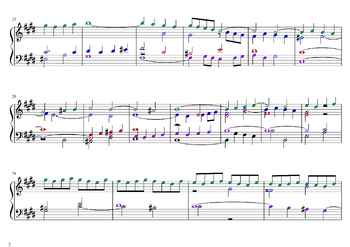
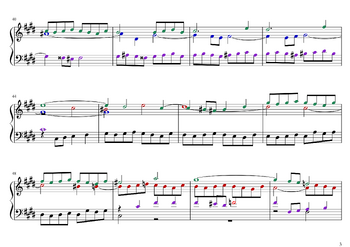
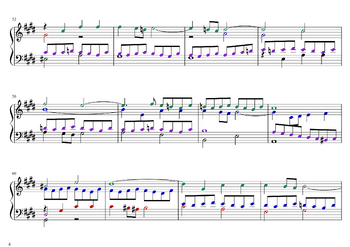
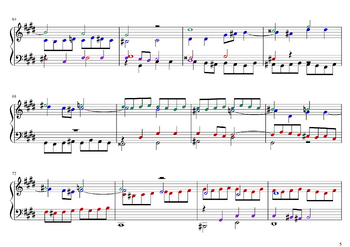
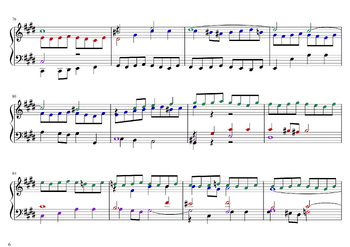
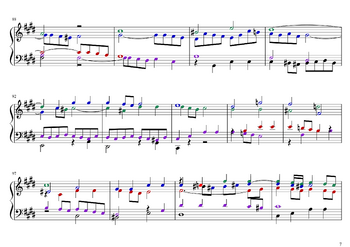
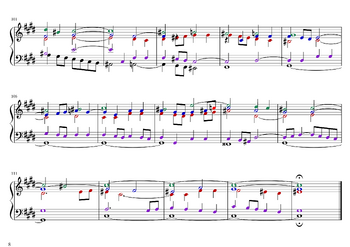
We have a collection of 6 arrangements for Johann Sebastian Bach - Prelude and Fugue in C-sharp minor, BWV 849
Why is Bach's Well-Tempered Clavier considered a cornerstone of Western classical music? Learn!
Who's behind the notes? Discover Johann Sebastian Bach: Master of Baroque Music
Johann Sebastian Bach's "Prelude and Fugue in C-sharp minor, BWV 849" is part of his monumental work, "The Well-Tempered Clavier." Here are some interesting facts about this composition:
Part of "The Well-Tempered Clavier": As mentioned, this piece is part of a larger collection, "The Well-Tempered Clavier," which consists of two volumes. Each volume contains a prelude and fugue in every major and minor key, totaling 48 pairs. This collection is considered a landmark in Western classical music.
Compositional Significance: The "Well-Tempered Clavier" is highly regarded for its compositional ingenuity. It's a testament to Bach's mastery of counterpoint, as each prelude and fugue explores different musical ideas and techniques.
C-sharp Minor: C-sharp minor is a key that is often associated with introspection and melancholy. Bach's choice of this key allows him to explore a range of emotions and musical possibilities in this prelude and fugue.
Equal Temperament: Bach's choice to compose in all 24 major and minor keys was significant because it demonstrated the possibilities of the equal temperament system. This system allowed for more versatility in tuning keyboard instruments and was a precursor to the tuning used in modern pianos.
Contrasting Movements: The prelude and fugue in C-sharp minor showcase Bach's ability to create contrasting movements. The prelude is usually characterized by its flowing, expressive character, while the fugue is a more intricate and contrapuntal piece, with different voices interweaving.
Historical Significance: The "Well-Tempered Clavier" had a profound influence on subsequent composers and musicians, including Beethoven, Mozart, and Chopin. It's still widely studied and performed by pianists and keyboard enthusiasts today.
Mathematical Precision: Bach was known for his use of mathematical patterns and structures in his compositions. Some musicologists have noted the use of numerology in his works, although this is a topic of ongoing scholarly debate.
Legacy: Bach's contributions to Western classical music, including "The Well-Tempered Clavier," have left an indelible mark. His innovative approach to composition, especially in this collection, has made him one of the most celebrated composers in history.
Diverse Interpretations: Bach's music is celebrated for its interpretive flexibility. Different pianists and musicians bring their unique interpretations to his works, allowing for a wide range of performances that can vary in tempo, dynamics, and emotional expression.
Historical Performances: While the original manuscripts of Bach's works have been lost, historical performances and recordings by renowned pianists and harpsichordists offer insight into how this composition has been played over the years.
Bach's "Prelude and Fugue in C-sharp minor, BWV 849" is a significant piece in the world of classical music, showcasing his unmatched compositional skill and contributing to the rich tapestry of Western musical heritage.







