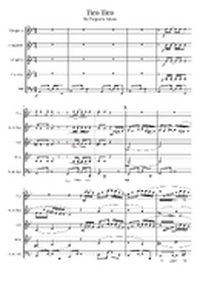
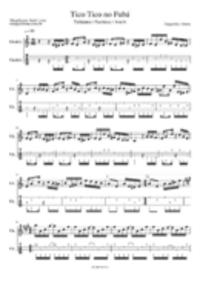
A lively choro composition symbolizing Brazilian music, often performed with flute, mandolin, and cavaquinho. Its "sparrow in the cornmeal" motif reflects its playful rhythm.
"Tico-Tico no Fubá" is one of Brazil's most famous choro compositions, originally titled "Tico-Tico no Farelo". It gained global popularity after being featured in 1940s Hollywood films and became a jazz standard. The title refers to a sparrow (tico-tico) eating cornmeal (fubá).
"Tico-Tico no Fubá" is a landmark choro piece composed by Zequinha de Abreu in 1917. Its lively melody, blending European folk influences with Afro-Brazilian rhythms, became a global sensation after Carmen Miranda's 1940s recordings. The title humorously references a sparrow ("tico-tico") eating cornmeal ("fubá"), evoking Brazilian rural life.
"Tico-Tico no Fubá" is one of Brazil's most iconic choro compositions, characterized by its lively rhythm and virtuosic melodies. Originally written for piano, it became internationally famous through orchestral and big band adaptations, though the composer intended it to be played at a more moderate tempo than modern interpretations.
A vibrant choro composition inspired by the sounds of a sparrow (tico-tico) pecking at cornmeal (fubá), becoming one of Brazil's most internationally recognized musical works.