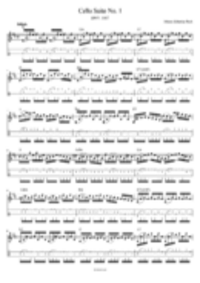
Bach's Cello Suite No. 1 in G Major, BWV 1007, is the first of six revolutionary suites for unaccompanied cello, composed during his tenure in Cöthen. Unlike anything written before for the instrument, these suites expanded the technical and expressive possibilities of the cello through complex counterpoint and innovative use of arpeggiated chords that create the illusion of multiple voices. The G major suite begins with one of the most recognizable preludes in classical music - a flowing sequence of harmonies that builds architectural complexity from simple patterns.
The Prelude from Bach's Cello Suite No.1 is one of the most famous solo string works ever written. Its flowing harmonic progression and technical demands make it a cornerstone of cello repertoire, widely used in films and popular culture.
Bach's Cello Suites, initially underappreciated, are now considered pinnacles of Baroque music. Their adaptation for violin demonstrates the works' timeless polyphonic richness and melodic flexibility.
This iconic Prelude from Bach's First Cello Suite has been transcribed for numerous instruments, demonstrating its timeless musical architecture. The saxophone version adapts the flowing arpeggios originally written for cello into a new timbral dimension while preserving the work's meditative character.
Bach's Cello Suite No. 1 in G Major, BWV 1007, is one of the most iconic works in the classical repertoire. Its Prelude, with its flowing arpeggios, is often transcribed for other instruments, including violin, despite being originally written for cello. The suite exemplifies Baroque-era craftsmanship and remains a technical and expressive benchmark for musicians.