Gabriel Fauré
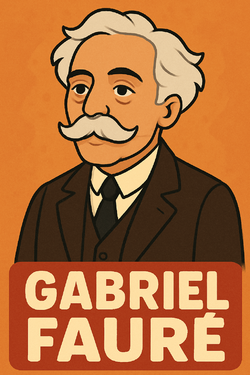
Gabriel Fauré was a highly influential French composer, organist, pianist, and teacher of the late Romantic and early modern eras. Renowned for his refined musical language, he is considered a crucial bridge between Romanticism and Impressionism.
Born in Pamiers, Fauré studied at the École Niedermeyer in Paris. He served as a church organist for decades, notably at La Madeleine in Paris. He became a revered professor of composition at the Paris Conservatoire, later serving as its director. His prolific output includes songs (mélodies), chamber music, piano works, and his famous Requiem. He experienced progressive hearing loss in later life.
- Fauré endured a difficult marriage; his wife, Marie Fremiet, reportedly disliked his music and his social circle. They lived largely separate lives.
- He suffered from progressive and severe hearing loss in his later years, starting in his 50s and worsening significantly. He described the sounds he perceived as distorted and dissonant, making composition challenging.
- As Director of the Paris Conservatoire (1905-1920), Fauré implemented significant reforms, modernizing the curriculum against considerable conservative opposition. He championed new music and composers like Ravel and Enescu.
- His death in 1924 was from natural causes, specifically pneumonia, at the age of 79. He was given a state funeral at the Église de la Madeleine.