
Béla Bartók: Pioneering Composer and Ethnomusicologist
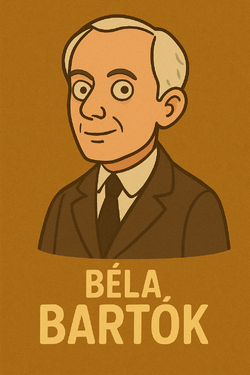
Hungarian composer, pianist, and ethnomusicologist renowned for integrating Eastern European folk music into modernist classical compositions.
Born in Nagyszentmiklós, Kingdom of Hungary (now Romania).
Studied at Royal Academy of Music in Budapest.
Co-founded comparative ethnomusicology with Zoltán Kodály, collecting over 10,000 folk tunes.
Emigrated to USA in 1940 due to political opposition to fascism.
Composed major works including six string quartets, Mikrokosmos, and Concerto for Orchestra.
- Bartók's 1907 appointment as piano professor at Budapest Academy lasted nearly 30 years, during which he composed little due to teaching demands.
- His political stance against Nazism and Hungary's alliance with Germany forced his exile to America, where he struggled financially despite support from colleagues.
- Died of leukemia in New York after initial misdiagnosis; only 10 mourners attended his funeral. His remains were transferred to Budapest in 1988 per his will.
- His folk music research extended beyond Hungary to Romania, Slovakia, Serbia, Turkey, and North Africa, revolutionizing ethnomusicological methodology.


