
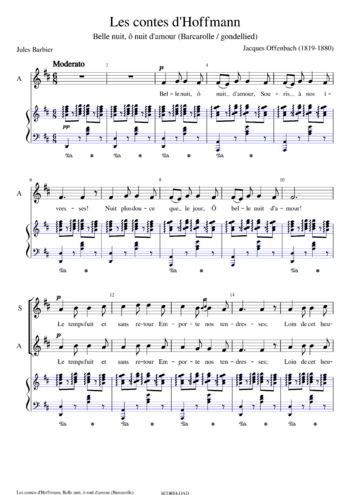
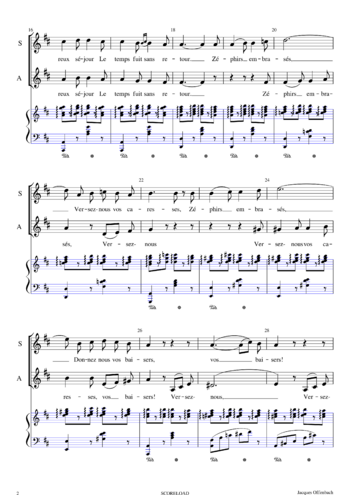
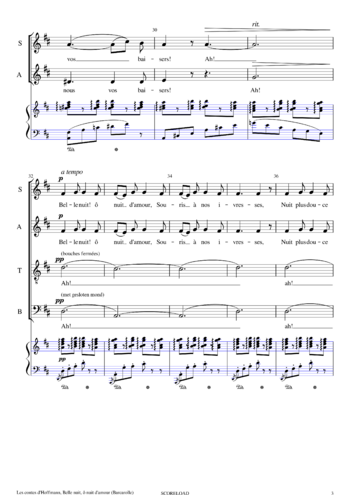
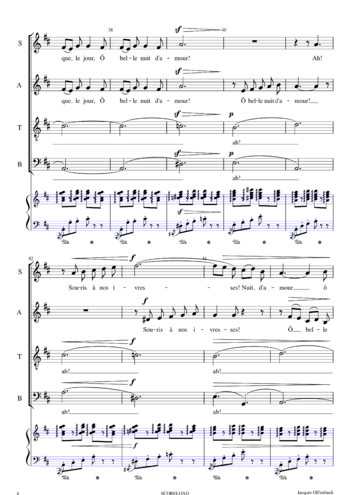
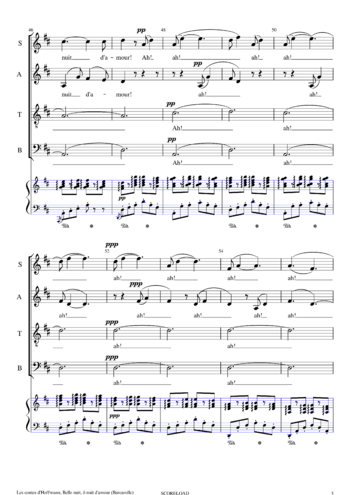

We have a collection of 5 arrangements for Jacques Offenbach - Les contes d'Hoffmann
What famous melody from Les contes d'Hoffmann became a standalone concert piece? Learn!
Who's behind the notes? Discover Jacques Offenbach: Master of Operetta
"Les contes d'Hoffmann" (The Tales of Hoffmann) is an opera composed by Jacques Offenbach. Here are some interesting facts about Jacques Offenbach and this famous opera:
Offenbach's Last Work: "Les contes d'Hoffmann" was Offenbach's final and most ambitious work. He died in 1880, just four months before the opera's premiere. Due to his untimely death, the opera was completed by other composers, including Ernest Guiraud.
Based on E.T.A. Hoffmann: The opera is based on the stories of German Romantic writer E.T.A. Hoffmann. It weaves together three of Hoffmann's fantastical tales, creating a narrative centered around the poet Hoffmann himself and his ill-fated love affairs.
Multiple Versions: There are several versions of "Les contes d'Hoffmann" due to the composer's death and subsequent revisions by other composers. This has led to different editions and interpretations of the opera.
Famous Aria: "Belle nuit, ô nuit d'amour" (often called the Barcarolle) is one of the most famous pieces from the opera. It's a duet sung by the characters Giulietta and Nicklausse and is known for its enchanting melody.
Influence on Later Composers: "Les contes d'Hoffmann" had a significant influence on later composers, particularly in the French opera tradition. The opera's lush, romantic style and innovative orchestration techniques were admired and emulated by composers like Claude Debussy and Maurice Ravel.
Challenging for Singers: The opera is noted for its challenging vocal roles, especially the part of Hoffmann, which requires a tenor with a wide vocal range and acting ability. Many famous tenors have taken on this demanding role.
Unfinished Opera: The opera was never completed in its entirety by Offenbach. Some of the acts were fully orchestrated and performed during his lifetime, while others remained in piano score. This has led to various interpretations and reconstructions of the missing scenes.
Popular Adaptations: "Les contes d'Hoffmann" has been adapted into various forms of media, including films, ballets, and even a graphic novel. Its enduring popularity has kept it alive in the cultural consciousness.
Themes of Romanticism and Fantasy: The opera explores themes of love, creativity, and the blurred lines between reality and fantasy, which are characteristic of Romantic literature and art.
Celebrated Revivals: Over the years, "Les contes d'Hoffmann" has seen numerous revivals and productions around the world, solidifying its place as one of the enduring classics of the opera repertoire.
"Les contes d'Hoffmann" remains a beloved and intriguing work in the world of opera, with its captivating music and timeless themes continuing to captivate audiences.





