Dmitri Shostakovich
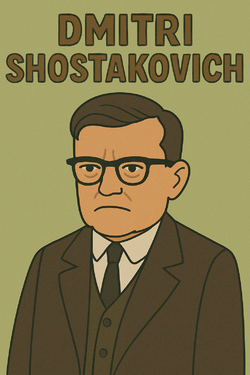
Soviet composer and pianist, among the most significant musical figures of the 20th century.
Shostakovich studied at the Petrograd Conservatory, gaining early fame with his First Symphony. His career was marked by alternating Soviet state approval and condemnation, particularly following the 1936 denunciation of his opera 'Lady Macbeth of Mtsensk'. He composed 15 symphonies, 15 string quartets, concertos, film scores, and chamber works, often embedding covert dissent against totalitarianism through musical symbolism.
- His opera 'Lady Macbeth of Mtsensk' was initially celebrated until a 1936 Pravda editorial condemned it as 'muddle instead of music', leading to its ban and Shostakovich's temporary withdrawal from public life.
- During WWII, his Seventh 'Leningrad' Symphony, composed while trapped in the besieged city, premiered in 1942 and became a global symbol of resistance against fascism.
- In 1948, he was again denounced during the Zhdanov Doctrine purges, forcing humiliating public apologies and restricting his creative output for years.
- Despite joining the Communist Party in 1960 under pressure, his Thirteenth Symphony 'Babi Yar' (1962) criticized Soviet antisemitism and censorship, causing immediate state suppression.
- He suffered chronic health issues including polio and lung cancer, exacerbated by stress and smoking. He died of lung cancer in 1975, with his controversial memoir 'Testimony' published posthumously.