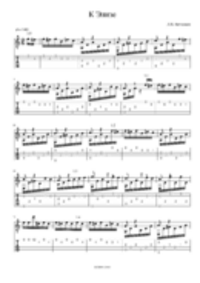
One of Beethoven's most recognizable works, "Für Elise" is a solo piano piece
composed in A minor. Though its origins remain debated, it epitomizes the
Romantic-era fascination with lyrical miniatures. The version here features
a clarinet-piano arrangement, expanding its tonal palette while preserving
the original's delicate melodic charm.
One of the most iconic piano pieces in history, “Für Elise” remains shrouded in mystery regarding its dedicatee. Though commonly associated with Therese Malfatti, modern research suggests alternative candidates like Elisabeth Röckel or young Elise Barensfeld. Its deceptively simple melody masks sophisticated rondo structure, blending lyrical intimacy with dramatic contrasts typical of Beethoven’s middle period.
One of Beethoven's most popular piano works, "Für Elise" was discovered 40 years after his death. The true identity of "Elise" remains unknown, with theories suggesting it might have been intended for "Therese" (possibly Therese Malfatti), but a transcription error occurred.
"Für Elise" is one of Beethoven's most famous piano works, though its origins remain debated. Composed around 1810, it was discovered 40 years after his death. Scholars believe the title refers to Therese Malfatti, a pupil Beethoven admired, but a transcription error turned "Therese" into "Elise". Its simplicity and melancholy melody made it a global icon of classical music.
One of Beethoven's most famous compositions, Für Elise (Bagatelle in A minor) was not published during the composer's lifetime. The identity of "Elise" remains debated - theories suggest it could be a misread of "Therese" (Therese Malfatti) or Elisabeth Röckel. The piece epitomizes the Romantic era's expressive piano miniatures.