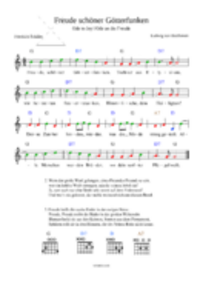
Beethoven's Ninth Symphony, completed when he was deaf, revolutionized classical music by integrating vocal soloists and choir into its final movement. It features Friedrich Schiller's "Ode to Joy," becoming a universal anthem of human unity. The work marks a pinnacle of the symphonic form and Beethoven's artistic legacy.
Beethoven's Ninth Symphony, featuring the iconic "Ode to Joy" chorus, revolutionized classical music by being the first major symphony to include vocal soloists and choir. The final movement's message of universal brotherhood continues to inspire global audiences.
Beethoven's Ninth Symphony, completed in 1824, is renowned for being the first major symphony to include vocal soloists and a chorus in its final movement, setting Friedrich Schiller's "Ode to Joy". The second movement, a scherzo, features dramatic rhythmic drive and is often performed as a standalone piece.
The "Ode to Joy" is the final choral movement of Beethoven's Ninth Symphony, setting Friedrich Schiller's 1785 poem of the same name to music. It is one of the most widely recognized works of classical music.
Beethoven's Ninth Symphony was groundbreaking as the first major symphony to include vocal soloists and chorus in its final movement, setting Friedrich Schiller's "Ode to Joy" poem to music.